

Blogs
Banarasi Saree: A Timeless Symbol of Tradition, Craftsmanship, and Modern Elegance

Banarasi sarees have long been revered as a symbol of tradition, grace, and unparalleled beauty. With their exquisite craftsmanship and timeless appeal, these sarees have captured the hearts of women across generations. Originating from the holy city of Varanasi, each Banarasi saree is a masterpiece that reflects centuries of artistic heritage.
Woven using fine silk and adorned with intricate gold and silver zari, Banarasi sarees are known for their rich texture, detailed motifs, and regal finish. Whether worn for weddings, festivals, or milestone celebrations, a Banarasi saree instantly elevates the wearer’s elegance—making it not just a garment, but a treasured heirloom.
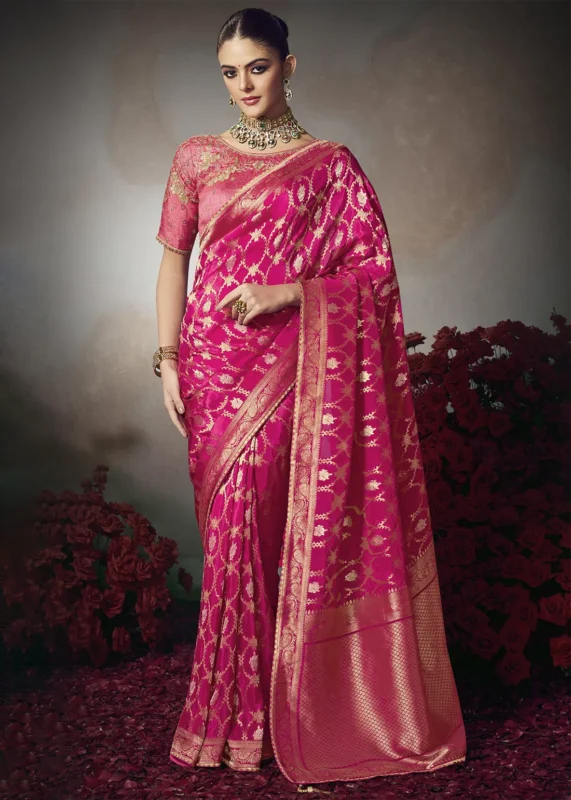
Rani Pink Banarasi Saree with Pink Embroidered Blouse
History and Cultural Significance of Banarasi Sarees
The history of Banarasi sarees dates back several centuries and is closely linked to India’s royal and cultural traditions. Believed to have flourished during the Mughal era, Banarasi weaving was patronised by royalty and nobility, making these sarees a symbol of prestige and luxury.
Beyond their visual appeal, Banarasi sarees represent the spiritual and artistic legacy of Varanasi. The weaving tradition is passed down through generations of skilled artisans, many of whom dedicate their entire lives to mastering this intricate craft. Wearing a Banarasi saree is not only a celebration of beauty but also a tribute to India’s enduring textile heritage.
The Intricate Weaving Process Behind Banarasi Sarees
The weaving process of Banarasi sarees is a labor-intensive and time-consuming art form that requires immense skill and precision. It begins with the selection of the finest silk threads, which are then dyed in vibrant colors using natural dyes. The dyed silk threads are then carefully wound onto bobbins, ready to be woven into the saree.
The weaving of Banarasi sarees is done on traditional handlooms, with each saree taking several weeks to complete. The craftsmen meticulously create the intricate patterns and motifs by interweaving silk threads with gold, silver or copper zari threads. The zari threads are made by wrapping fine metallic strips around a silk thread, resulting in a lustrous and durable embellishment. The weaving process requires immense concentration and expertise, as even a slight error can ruin the entire saree.
The motifs and designs on Banarasi sarees are inspired by a variety of sources, including royal architecture, nature, and religious symbols. The most common motifs include floral patterns, peacocks, elephants, and paisleys, all intricately woven into the fabric. The weaving technique used in Banarasi sarees is known as brocade, which creates a raised effect on the fabric, giving it a three-dimensional appearance. This intricate weaving process is what sets Banarasi sarees apart and makes them highly coveted by women around the world.
Popular Motifs and Designs in Banarasi Sarees
Banarasi sarees are known for their elaborate and exquisite motifs, each telling a unique story. The motifs used in these sarees are inspired by various elements of Indian culture, including nature, architecture, and mythology. The most popular motifs include:
1. Floral patterns: Flowers symbolize beauty, femininity, and fertility. Banarasi sarees often feature intricate floral patterns, including roses, lotuses, and jasmine. These motifs are typically woven in vibrant colors, adding a touch of elegance and grace to the saree.
2. Peacocks: The peacock is considered a symbol of beauty, grace, and royalty in Indian culture. Banarasi sarees often feature peacock motifs, with the majestic bird intricately woven into the fabric. The peacock motifs are usually adorned with zari work, creating a stunning visual effect.
3. Elephants: Elephants symbolize strength, wisdom, and prosperity in Indian culture. Banarasi sarees often feature elephant motifs, with the gentle giants intricately woven into the fabric. The elephant motifs are typically embellished with zari work, creating a regal and majestic look.
4. Paisleys: Paisleys (kalga and bel) are a classic motif in Banarasi sarees, with their origins dating back to ancient Persia. These teardrop-shaped motifs represent fertility and abundance. Banarasi sarees often feature paisley motifs in various sizes and patterns, creating a mesmerizing effect on the fabric.
These motifs are woven into the fabric using the brocade technique, creating a raised effect that adds depth and texture to the saree. The intricate designs and motifs on Banarasi sarees are a testament to the skill and artistry of the weavers, making each saree a unique and cherished masterpiece.
Types of Banarasi Sarees by Fabric
While silk remains the most traditional and sought-after fabric, modern Banarasi sarees are available in a variety of materials to suit different occasions and preferences.
Silk Banarasi Sarees
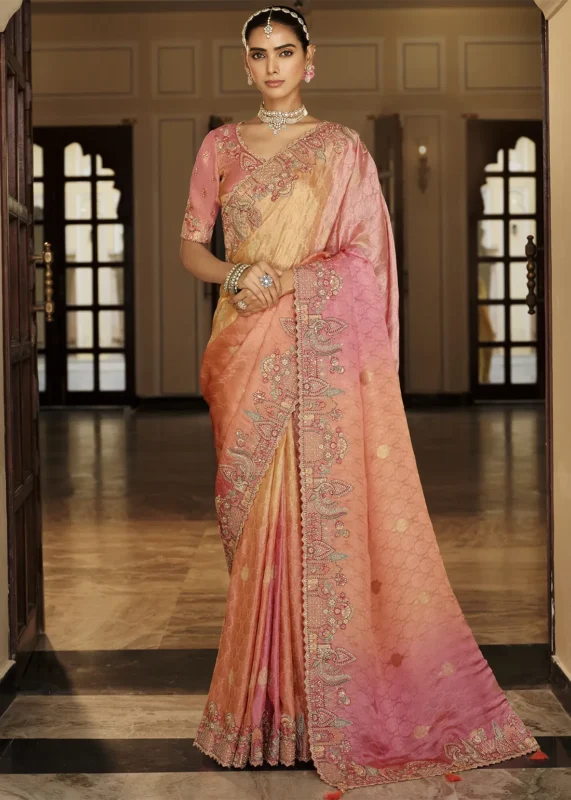
Peach & Pink Banarasi Silk Saree with Embroidery Work
Silk Banarasi sarees are known for their lustrous texture and rich feel. The silk used in these sarees is sourced from the finest silk farms, ensuring that each thread is of the highest quality. The weaving process involves meticulously intertwining the silk threads with zari, resulting in a fabric that is both luxurious and durable. The intricate designs and motifs on Silk Banarasi sarees are a testament to the skill and artistry of the weavers.
Silk Banarasi sarees are a classic choice for weddings and formal ceremonies.
Organza Banarasi Sarees

Organza Banarasi Saree
Organza Banarasi sarees have a lightweight and sheer quality, making them perfect for summer weddings and festivities.
Georgette Banarasi Sarees
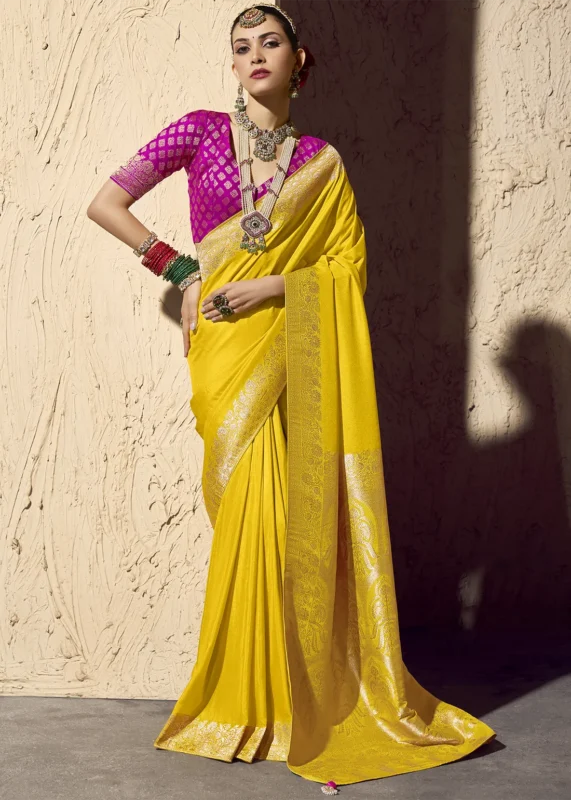
Yellow Georgette Banarasi Saree with Golden Zari
Georgette Banarasi sarees, on the other hand, have a slightly heavier drape and are often embellished with intricate embroidery and sequins.
Chiffon Banarasi Sarees

Chiffon Banarasi Saree
Chiffon Banarasi sarees are known for their fluidity and grace, making them a popular choice for evening events and parties.
Each fabric offers a unique charm and allows women to choose a Banarasi saree that suits their personal style and occasion.
Modern Styling and Fusion Trends in Banarasi Sarees
Contemporary Banarasi sarees have evolved beyond traditional styling. Today, they are often paired with designer blouses, belts, jackets, and even subtle embellishments like stone work and embroidery. This fusion approach allows women to enjoy the heritage of Banarasi sarees while expressing a modern personal style.
Pastel Banarasi sarees in shades such as ivory, blush pink, lavender, mint green, and peach have become increasingly popular—especially for daytime weddings and receptions. These softer tones offer understated elegance while retaining the signature Banarasi charm.
Here are some styling tips to help you make a statement with your Banarasi saree:
1. Traditional elegance: For a classic and timeless look, drape your Banarasi saree in the traditional style. Let the pallu fall gracefully over your shoulder, and pleat the rest of the saree neatly. Pair it with a contrasting or matching blouse and traditional jewelry to complete the look.
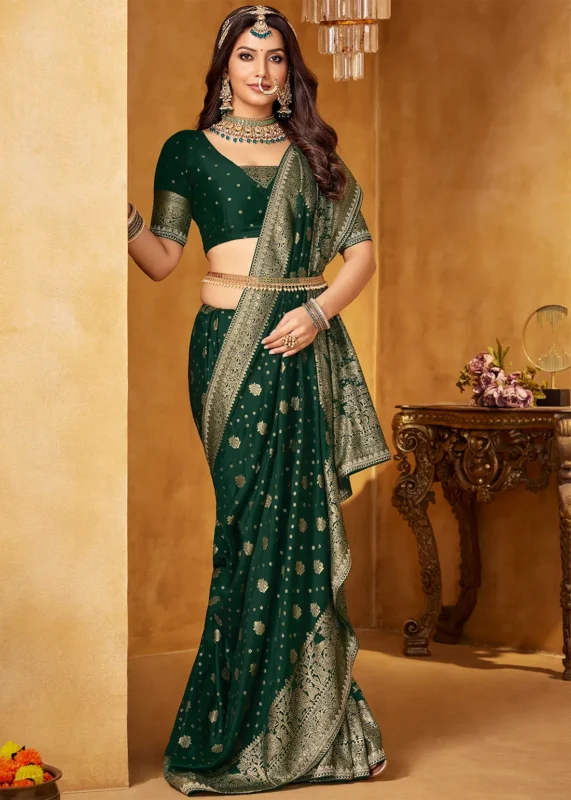
Adding a Belt can instantly elevate your look.
2. Modern twist: Give your Banarasi saree a contemporary twist by experimenting with different draping styles. Try a dhoti drape or a pant-style drape to add a touch of modernity to your ensemble. Pair it with a trendy blouse or add a belt and statement accessories to create a fusion look.
3. Contrasting colors: Banarasi sarees often feature vibrant colors and intricate designs. Make a bold statement by choosing a saree with contrasting colors, such as a deep red saree with gold zari or a royal blue saree with silver zari. Pair it with minimal jewelry to let the saree take center stage.
4. Mix and match: Don’t be afraid to mix and match your Banarasi saree with other fabrics and textures. Pair a Banarasi saree with a sheer blouse or a velvet jacket to add an element of surprise to your outfit. Experiment with different combinations to create a unique and personalized look.
Remember, the key to styling a Banarasi saree is to let the saree shine. Keep the rest of your outfit and accessories minimal, allowing the saree to be the focal point of your ensemble. With their timeless appeal and regal charm, Banarasi sarees are sure to make a lasting impression wherever you go.
Choosing Banarasi Sarees for Different Occasions
Banarasi sarees are incredibly versatile and can be styled for a wide range of celebrations:
- Weddings: Rich silk Banarasi sarees with traditional motifs and deep jewel tones
- Mehendi & Sangeet: Lightweight Banarasi sarees in olive green, teal, pastel hues, or soft golds
- Receptions: Contemporary Banarasi sarees with refined zari, embroidery, or fusion detailing
- Daytime Events: Organza and soft silk Banarasi sarees in lighter shades
This adaptability is what makes Banarasi sarees relevant across generations and occasions.
Maintenance and Care for Banarasi Sarees
Banarasi sarees are not just a fashion statement; they are a cherished heirloom that can be passed down from one generation to another. To ensure the longevity of your Banarasi saree, it is essential to provide proper maintenance and care. Here are some tips to keep your saree in pristine condition:
1. Storage: When not in use, store your Banarasi saree in a cool, dry place away from direct sunlight. Avoid storing it in plastic bags, as they can trap moisture and lead to mold or mildew growth. Instead, use a cotton or muslin cover to protect the saree from dust and insects.
2. Cleaning: Banarasi sarees should be dry cleaned to maintain their quality and color. Avoid washing them at home, as the delicate fabric and intricate weaving can be damaged. Take your saree to a trusted dry cleaner who specializes in handling silk garments.
3. Ironing & Wrinkle removal: If your Banarasi saree develops wrinkles, avoid ironing it directly. Instead, place a clean cotton cloth over the saree and iron it on a low heat setting. This will prevent any damage to the fabric and zari work.
4. Preservation: Over time, zari work on Banarasi sarees may tarnish due to exposure to air and moisture. To preserve the zari, wrap the saree in acid-free tissue paper before storing it. This will prevent any discoloration or oxidation of the zari.
By following these maintenance tips, you can ensure that your Banarasi saree remains in excellent condition for years to come. With proper care, your saree will continue to be a cherished piece of your wardrobe and a symbol of timeless beauty.
Why Banarasi Sarees Continue to Be a Wardrobe Essential
Banarasi sarees effortlessly blend tradition with modern elegance. Their ability to adapt to changing fashion trends—while retaining their cultural essence—makes them a staple in every woman’s ethnic wardrobe. From grand weddings to intimate celebrations, Banarasi sarees remain a symbol of grace, heritage, and timeless beauty.
Where to Buy Authentic Banarasi Sarees
When it comes to purchasing an authentic Banarasi saree, it is essential to buy from trusted sources. Authentic Banarasi sarees can be found at specialty boutiques and online stores. It is important to do your research and choose a reputable seller to ensure that you are getting a high-quality, authentic saree.
At Urban Womania, Banarasi sarees are curated with the modern woman in mind—balancing traditional artistry with comfort, versatility, and contemporary appeal. Our collection features styles suitable for weddings, festive occasions, and global celebrations, making Banarasi sarees accessible and wearable for today’s lifestyle.
Conclusion
In conclusion, Banarasi sarees are not just garments; they are a testament to India’s rich cultural heritage and craftsmanship. With their intricate weaving, vibrant colors, and delicate motifs, these sarees have stood the test of time and continue to captivate women across generations. Whether it’s a wedding, festival, or any special occasion, draping a Banarasi saree instantly elevates the wearer’s elegance and leaves a lasting impression. So, go ahead and add a Banarasi saree to your wardrobe today, and experience the rich heritage and artistry of India.

